- Mold Preparation: Molds are cleaned and coated with a release agent or refractory material to prevent adhesion and extend tool life. Sand molds are compacted and reinforced as required for the part geometry.
- Pouring: Molten aluminum is carefully poured from a ladle into the mold, maintaining a steady, controlled flow to minimize turbulence and oxide formation.
- Solidification: The metal cools and solidifies within the mold. Cooling rate depends on the mold material — metal permanent molds cool faster than sand molds, refining grain structure and improving mechanical properties.
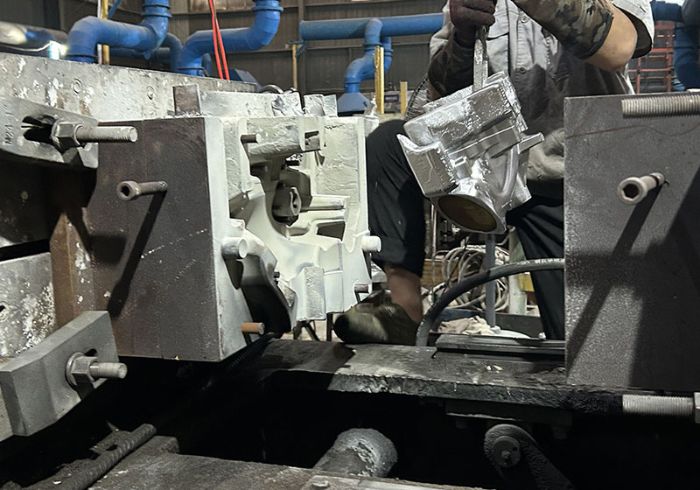
- Demolding: Once solidified, the casting is extracted from the mold. Permanent molds are opened and reused; sand molds are broken away and the sand reclaimed.
- Finishing: Gates, runners, and risers are trimmed, and any required secondary operations — machining, surface treatment, or inspection — are carried out before shipment.
Gravity Casting
Aluminum gravity casting is a metal casting process in which molten metal is poured into a mold under the influence of gravity alone, without the use of applied pressure or vacuum. It is one of the most straightforward and cost-effective casting methods available, commonly used to produce medium-to-large parts across a broad range of alloys — particularly where dense microstructure, good mechanical properties, and low tooling cost are the primary drivers.
Advantages of Aluminum Gravity Casting:
- Wide Material Compatibility: Suitable for a broad range of aluminum alloys and other non-ferrous metals.
- Scalable Part Size: Handles components from small brackets to large structural housings within a single process framework.
- Good Dimensional Accuracy: Permanent metal molds deliver consistent part geometry and repeatable dimensions across production runs.
- Low Tooling and Operating Cost: Simpler equipment and permanent mold reusability keep both upfront and ongoing production costs moderate.
- Complex Internal Geometry: Sand cores enable the casting of intricate internal cavities and undercuts that would otherwise require secondary machining.
_1750747237_WNo_1000d800.jpg)
Aluminum Gravity Casting at Innovaw
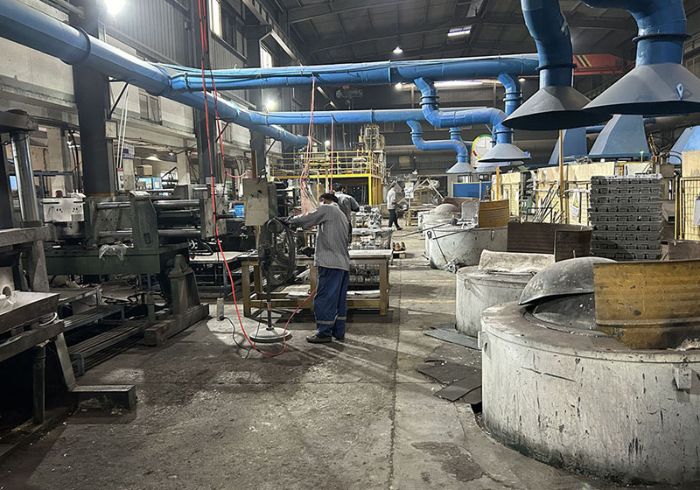
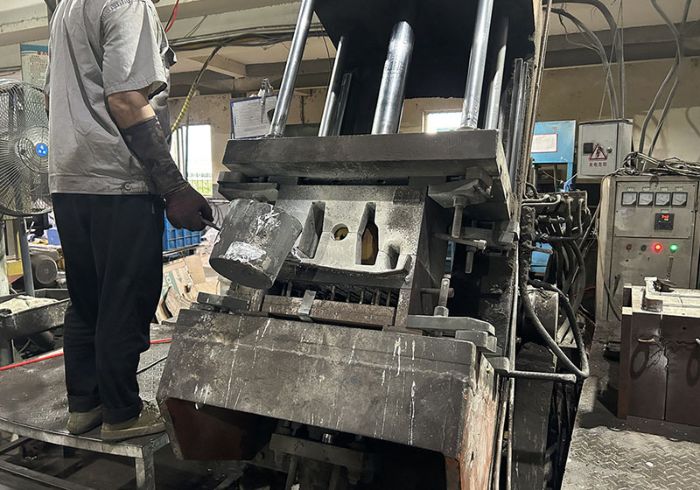
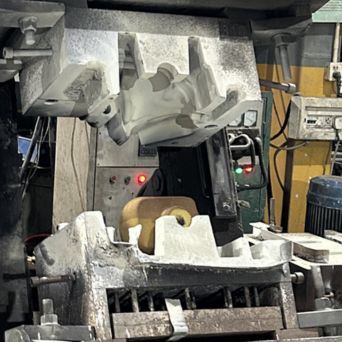
Innovaw's gravity casting production line operates 12 advanced tilting gravity casting machines, supported by sand mixers, molding machines, pouring equipment, and a full suite of post-processing systems. Our gravity die casting products serve the automotive, medical device, aerospace, lighting, energy, marine, industrial equipment, and kitchen appliance sectors. Part sizes range from 100×100 mm to 600×600 mm, with weights from 100 g to 50 kg and a daily production capacity of 3–4 metric tons.
Aluminum Gravity Casting Product Cases
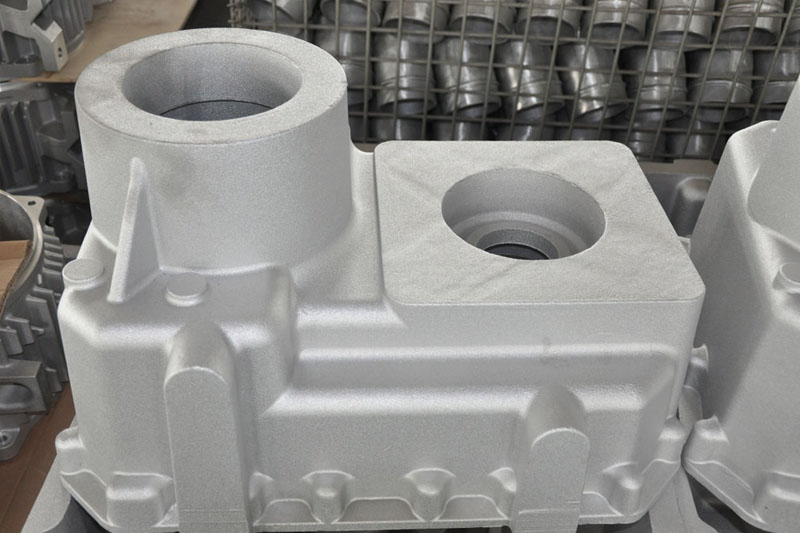
Reduction Gear Housings
Industrial Equipment Drive Systems
Industrial Equipment Drive Systems
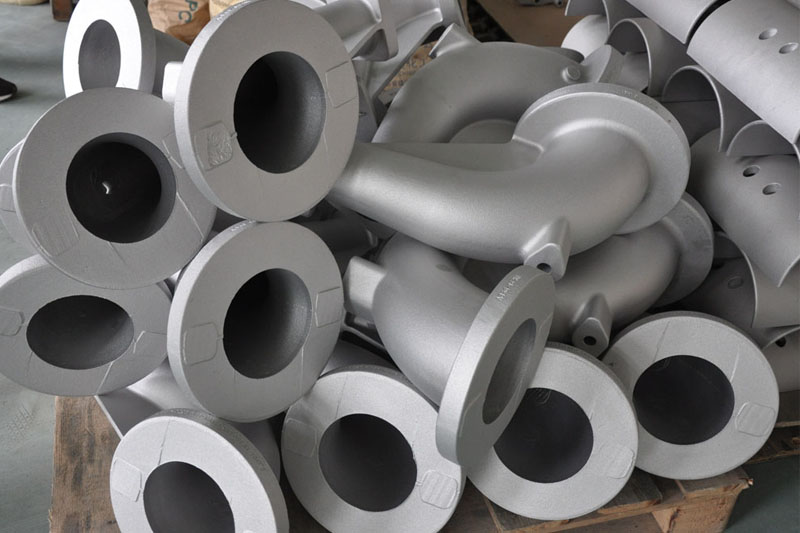
Pipe Elbow Nozzles
Energy Industry
Energy Industry
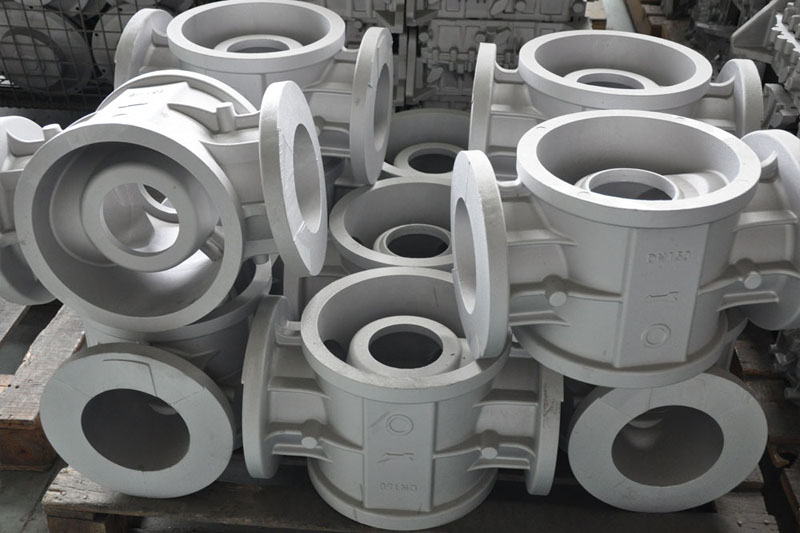
Industrial Valve Body Castings
Oil & Natural Gas
Oil & Natural Gas
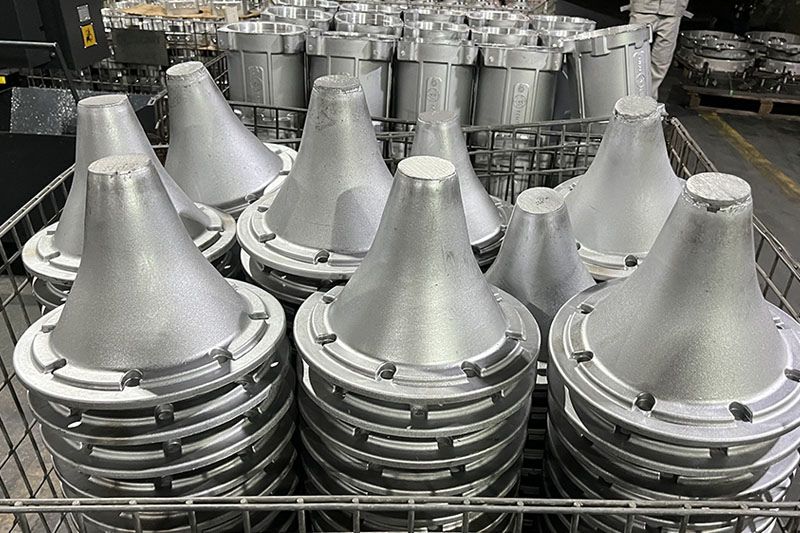
Turbine Housings
Aerospace
Aerospace
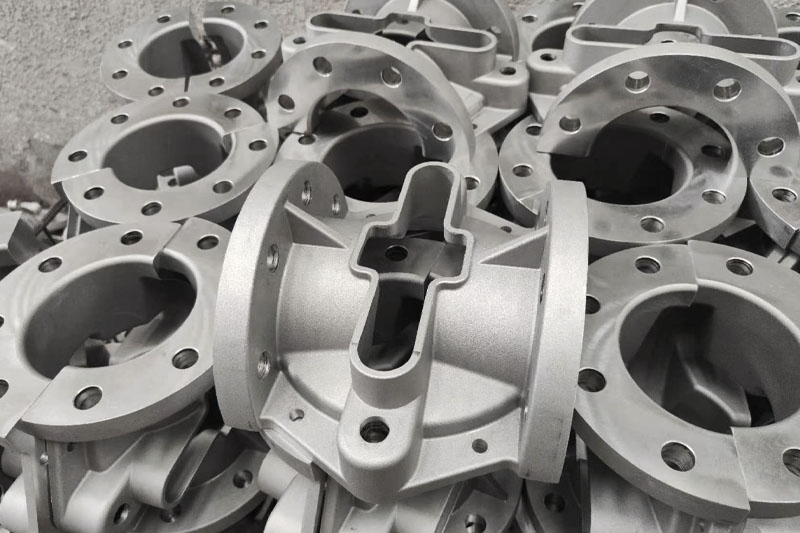
Valve Housings
Chemical Industry
Chemical Industry
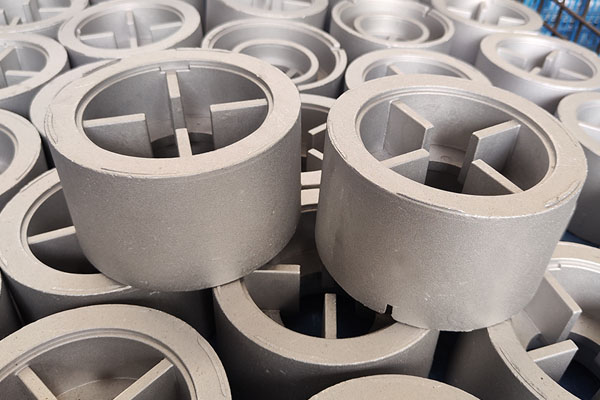
Fan Stator Tube
Industrial Equipment
Industrial Equipment
Material Scope
Innovaw's foundry sources and qualifies materials against ASTM, JIS, DIN, ENAC, ISO, and GB specifications. Aluminum alloy grades commonly used in gravity casting include:
- Aluminum Alloys
ASTM-A319, A413, A355, A356, A357
JIS-AC2B, AC4D, AC4C, AC3A, AC4A
DIN-AlSi7Cu4, AlSi5Cu1Mg, AlSi7Mg, AlSi12, AlSi9Mg, AlSi12Cu2Mg1, AlSi6Cu4
ENAC-45000, 45300, 42100, 44100, 43300
How Aluminum Gravity Casting Works
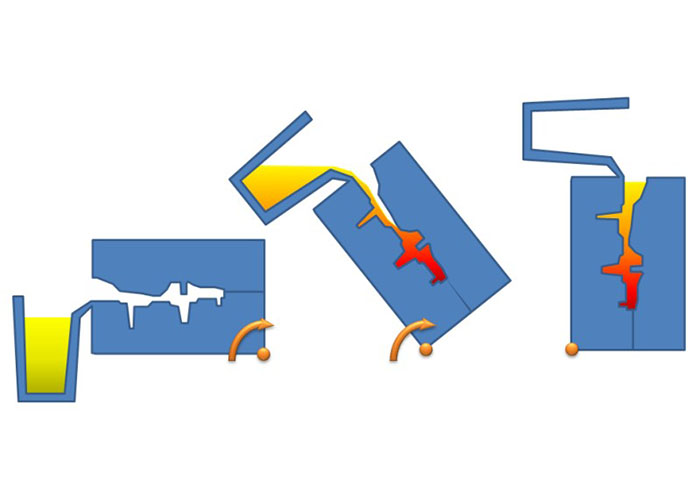
Aluminum gravity casting relies on natural gravity to draw molten aluminum into the mold cavity, where it cools and solidifies to form the finished casting. Unlike die casting, no external pressure is applied — the process is gentler and inherently suited to producing parts with dense, uniform microstructures and favorable mechanical properties.
Why Choose Innovaw for Aluminum Gravity Casting
Innovaw's primary commitment is to meet — and consistently exceed — customer expectations in quality, delivery, and performance. Our aluminum gravity casting capabilities are backed by proven production capacity, deep technical expertise, rigorous quality systems, and responsive customer service.
Production Capability
Over more than 20 years of continuous development, Innovaw has built a mature and robust gravity casting production system, with standardized workshops and advanced equipment supporting a daily output of 3–4 metric tons.
Our production operations are led by a dedicated management team of more than 20 specialists, supported by hundreds of skilled workers who deliver professional and reliable service to customers every day.
We offer a complete one-stop service — from mold development and PPAP approval through serialization, gravity die casting (GDC), CNC machining, and surface treatment — so customers manage a single supplier throughout the entire product lifecycle.
Technical Capability
Our engineering team comprises more than 20 engineers and industry specialists, providing comprehensive technical support across the full product development lifecycle.
Drawing on deep process experience, we offer an end-to-end technical service spanning DFM analysis, 3D mold design, mold flow simulation, and rapid prototyping — helping customers move efficiently from drawing to high-quality finished part.
We specialize in developing effective engineering solutions that help customers reduce per-part cost while improving product quality and consistency.
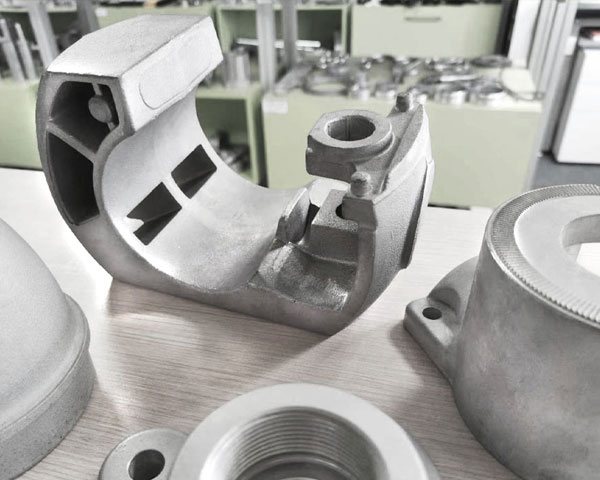
Our team has extensive experience designing and producing geometrically complex parts, with particular expertise in using sand cores to achieve intricate internal cavity structures within permanent tooling.
Through advanced mold filling technology and optimized GDC process parameters, we control metal flow, minimize turbulence, and consistently improve casting soundness and yield.
Quality Control
All Innovaw gravity casting products are produced and managed under the IATF 16949 quality management system.
We apply the full suite of automotive core quality tools — APQP, FMEA, PPAP, MSA, and SPC — to maintain rigorous in-process control at every production stage.
Regular process audits are conducted in accordance with VDA 6.3, and product audits are performed under VDA 6.5, ensuring consistent process integrity and product conformance.
Customer complaints are addressed systematically through 8D methodology, with root cause analysis and corrective actions documented and tracked to closure.
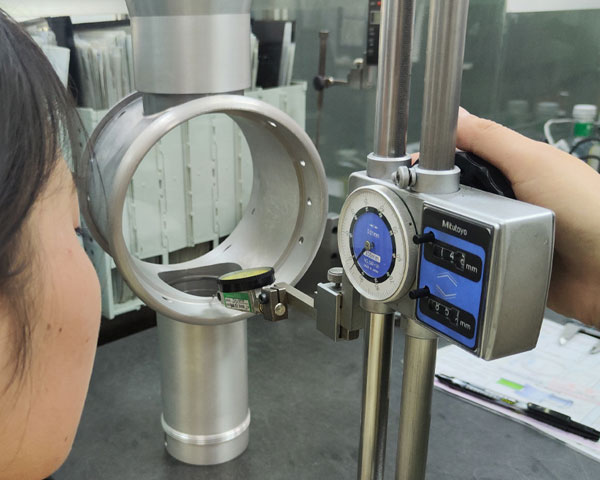
Every part undergoes full-process inspection — from first article through final inspection — using equipment including spectrometers, 3D scanners, X-ray imaging, and ZEISS CMM coordinate measuring machines.
Gravity Casting FAQs
Q1. What metal materials can gravity casting be applied to?
Gravity casting is compatible with a range of non-ferrous metals and alloys. Aluminum alloys are by far the most widely used material, valued for their combination of low density, good fluidity, and favorable mechanical properties. Zinc alloys, copper alloys (brass and bronze), and magnesium alloys can also be gravity cast, though each material presents its own process considerations around mold temperature, pouring speed, and solidification behavior. At Innovaw, aluminum alloy gravity casting is our primary focus, covering grades from the ASTM, JIS, DIN, ENAC, ISO, and GB standard families.
Q2. How does gravity casting compare to other casting processes for delivery lead time?
Gravity casting generally offers competitive lead times for medium-volume production programs. Because permanent molds can be reused thousands of times without modification, cycle setup between production runs is minimal — reducing turnaround time compared to sand casting, which requires a new mold for each pour. Compared to high-pressure die casting, gravity casting tooling is simpler and less expensive to manufacture, which shortens the tooling development phase. For prototype and first-article work, Innovaw's integrated DFM-to-production workflow further compresses the path from drawing to approved part.
Q3. How do I know if my parts are suited to gravity casting?
Gravity casting is a strong fit when one or more of the following apply to your component: the part requires superior mechanical properties — particularly tensile strength, fatigue resistance, or pressure tightness — that high-pressure die casting cannot reliably achieve due to porosity risk in thick sections; the geometry is moderately complex, with wall thicknesses typically above 3–4 mm; production volume is in the medium range (hundreds to low thousands of pieces per year), where the economics of HPDC tooling are not yet justified; or the part requires good machinability and a dense, homogeneous microstructure for subsequent precision machining. If you are unsure, Innovaw's engineering team can assess your drawing and recommend the most appropriate process.
Q4. In which industries is gravity casting most widely used?
Gravity casting is applied across a wide range of industries where structural integrity, part density, and moderate geometric complexity are key requirements. Major sectors include automotive (engine components, gearbox housings, suspension parts), aerospace (structural brackets, turbine housings, actuation components), industrial equipment (pump bodies, valve housings, gear cases), energy (wind turbine brackets, photovoltaic mounting structures), and marine (propulsion housings, stabilizer components). Its ability to produce dense, high-strength castings without high-pressure tooling makes gravity casting particularly well suited to parts that must pass pressure testing, carry structural loads, or undergo significant post-casting machining.
Q5. What is the difference between gravity casting and high-pressure die casting?
The fundamental distinction is how metal enters the mold. In gravity casting, molten metal is poured under the force of gravity, filling the cavity at a relatively low velocity — producing a calm, controlled fill that minimizes turbulence and results in a dense, low-porosity microstructure. In high-pressure die casting (HPDC), metal is injected at high velocity under pressures of up to 200 MPa, enabling very thin walls, complex geometries, and fast cycle times, but at the cost of higher porosity risk in thick cross-sections and a less dense overall structure.
As a result, gravity cast parts typically offer better mechanical properties and are more suitable for structural, load-bearing, or pressure-tight applications. HPDC parts offer greater geometric complexity, thinner walls, faster production rates, and lower per-part cost at high volumes — but may not meet the density or strength requirements of demanding structural applications. The right choice depends on part geometry, mechanical requirements, and production volume.
Q6. Why choose gravity casting to manufacture your products?
Among the available casting methods, gravity casting stands out in a specific but significant range of manufacturing scenarios — combining structural performance, process controllability, and cost-effectiveness in a way that neither sand casting nor high-pressure die casting can fully replicate.
1. When to choose gravity casting
- Moderate geometric complexity: Housings, brackets, covers, and enclosures with wall thicknesses above 3–4 mm and moderately complex internal geometry — particularly where sand cores are used for internal passages.
- High mechanical property requirements: Parts that must carry structural loads, resist pressure, or withstand impact — where microstructure density and fatigue strength are critical.
- Medium-to-high surface quality and dimensional standards: Where as-cast surface finish and dimensional consistency need to reduce downstream machining requirements.
- Medium production volumes: Typically hundreds to a few thousand pieces per year — where permanent tooling pays back quickly but HPDC tooling investment is harder to justify.
- High density and machinability requirements: Parts requiring good air- or fluid-tightness, or extensive post-casting precision machining, benefit from gravity casting's consistently dense microstructure.
Typical applications include automotive structural parts, industrial equipment housings, motor housings, wind power and photovoltaic structural brackets, and premium appliance components.
2. Key advantages of gravity casting
- Superior mechanical properties: Controlled solidification and fine grain structure produce castings with higher tensile strength, better fatigue life, and greater toughness than equivalent sand castings — particularly important for load-bearing or structurally critical parts.
- Better dimensional accuracy and surface finish: Permanent metal molds deliver higher molding precision and smoother as-cast surfaces than sand casting, reducing the extent of secondary machining required.
- Moderate tooling cost and long mold life: Gravity casting molds are less expensive than HPDC tooling and can withstand thousands of cycles, making the process economical for medium-volume programs over their full production life.
- Consistent process control and part repeatability: Compared to hand-poured sand molds, gravity casting with tilting machines offers stable, programmable process parameters — improving part-to-part consistency and simplifying quality control.
If you need an aluminum alloy casting solution that balances mechanical performance, dimensional precision, and production economics, gravity casting is a proven and reliable choice — delivering the structural integrity and surface quality that most industrial products demand, while remaining cost-competitive across medium production volumes.
Technical Capabilities
Request a Quote
Name can't be empty
Email error!
Send Your Message
Note: If you are looking for a job, please send an email to it2@innovaw.com