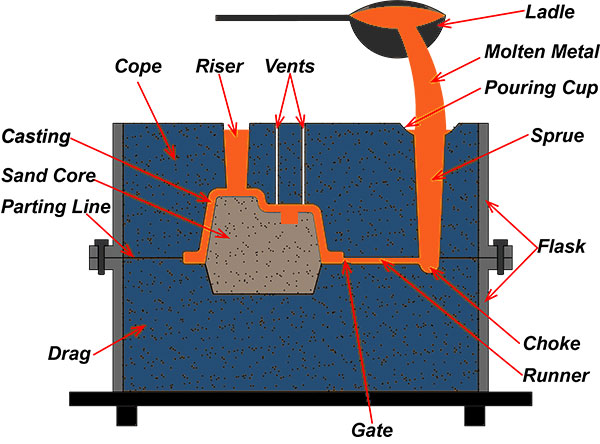
- Pattern Making: A pattern representing the part geometry is produced from wood, metal, or plastic. Split patterns are used for parts that require mold assembly from two or more halves.
- Mold Creation: Bonded sand is compacted around the pattern within a mold box (flask). Sand cores are inserted for parts with internal passages or hollow sections.
- Pattern Removal: The pattern is carefully withdrawn, leaving a precise cavity in the sand in the shape of the part.
- Mold Assembly: The mold halves are brought together and aligned. The gating system — comprising the sprue, runners, and gates — provides controlled channels for metal entry.
- Pouring: Molten aluminum is poured into the mold through the gating system, filling the cavity from the bottom upward to minimize turbulence and oxide formation.
- Solidification and Cooling: The aluminum cools and solidifies within the sand mold. Cooling time depends on part section thickness and the thermal properties of the sand system used.
- Shakeout and Cleaning: The mold is broken apart to release the casting. Gates, runners, and risers are removed, and the part surface is cleaned by shot blasting or mechanical means.
- Finishing: The casting is dimensionally inspected and any required secondary operations — machining, surface treatment, or coating — are carried out before final inspection and delivery.
Sand Casting
Aluminum sand casting is one of the most widely used metal forming processes, in which molten aluminum is poured into a mold packed from bonded sand. The sand mold is shaped around a pattern that defines the part cavity, and the aluminum solidifies within it to form the finished component. Sand casting is exceptionally versatile, requires minimal tooling investment, and is well suited to producing aluminum parts across a broad range of sizes and geometric complexities — from small prototype components to large structural castings.
Advantages of Aluminum Sand Casting:
- Low-Cost Tooling: Sand molds are inexpensive to produce — patterns can be made from wood, metal, or plastic — making sand casting the most accessible process for low-to-medium production volumes and prototype work.
- Versatile Geometry: Accommodates simple to moderately complex part shapes, including internal cavities and undercuts formed with sand cores.
- Large Part Capability: Sand casting imposes no practical upper limit on part size, making it the go-to process for large structural components that exceed the capacity of permanent-mold or die casting equipment.
- Broad Alloy Compatibility: Compatible with the full range of aluminum alloys, including high-strength grades suited to structural and load-bearing applications.
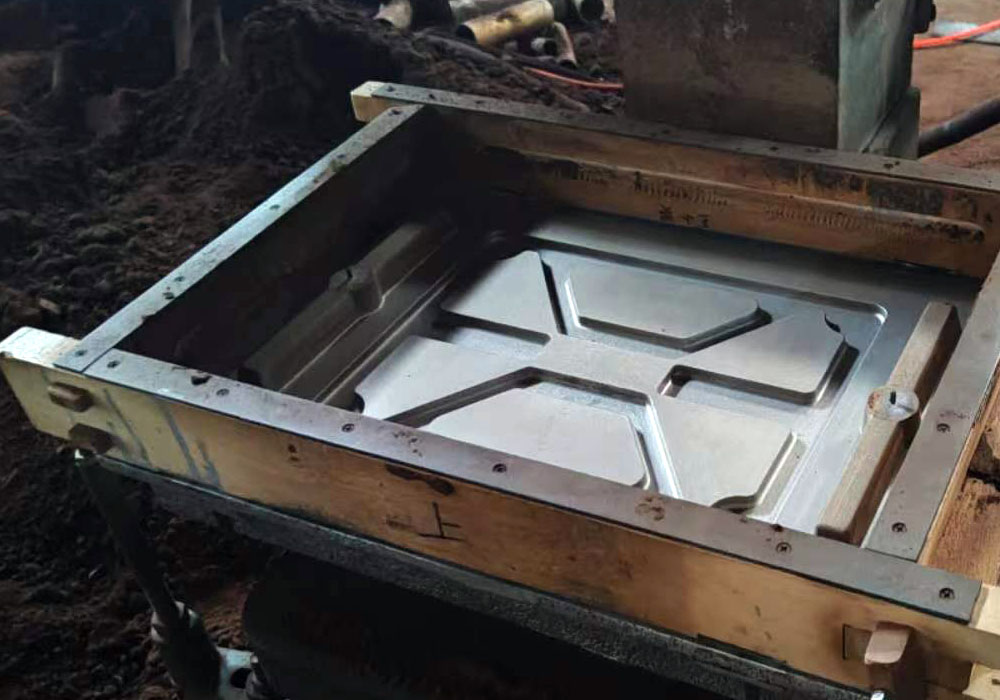
Aluminum Sand Casting at Innovaw
Innovaw operates three dedicated sand casting production lines, equipped with molding machines, sand drop machines, vibrating tables, surface drying kilns, mold turning and lifting equipment, box closing machines, sand treatment systems, sand storage and conveying systems, and sand mixing equipment. We work with resin sand, quartz sand, and clay sand — selecting the most appropriate system for each application based on part geometry, alloy, and required surface quality.
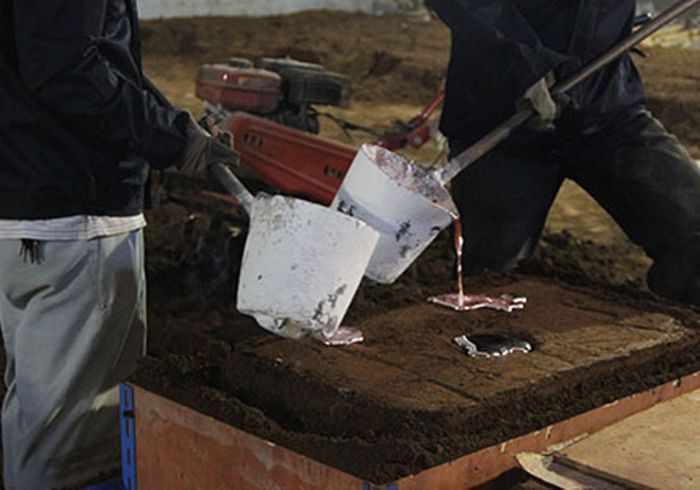
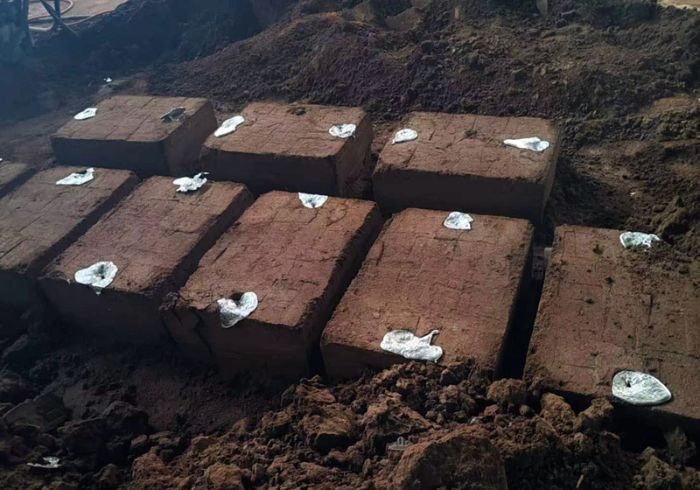
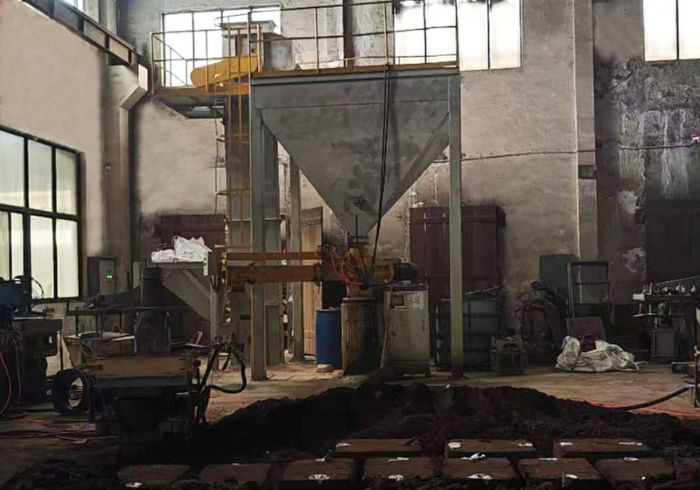
Our sand casting products serve industries including marine, automotive, aerospace, construction, heavy machinery, oil & gas, rail, and power generation. Part sizes range from 200×200 mm to 1,000×1,000 mm, with weights from 100 g to 100 kg and a daily production capacity of 3–5 metric tons.
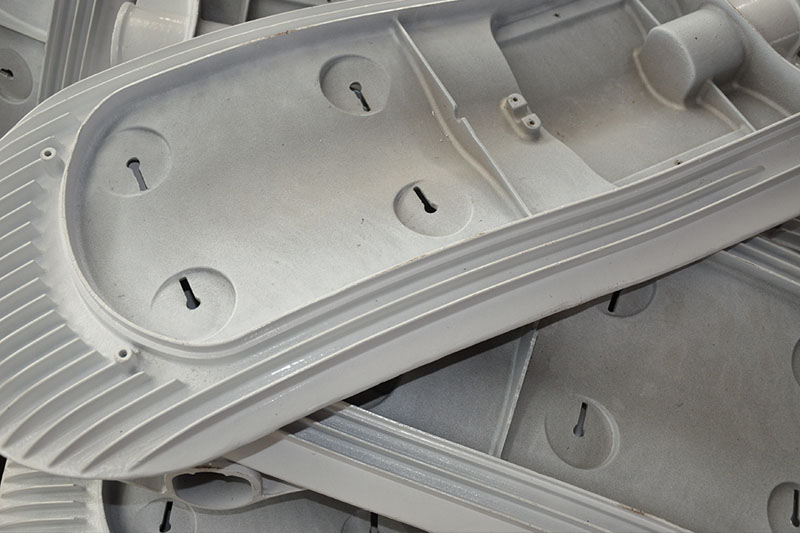
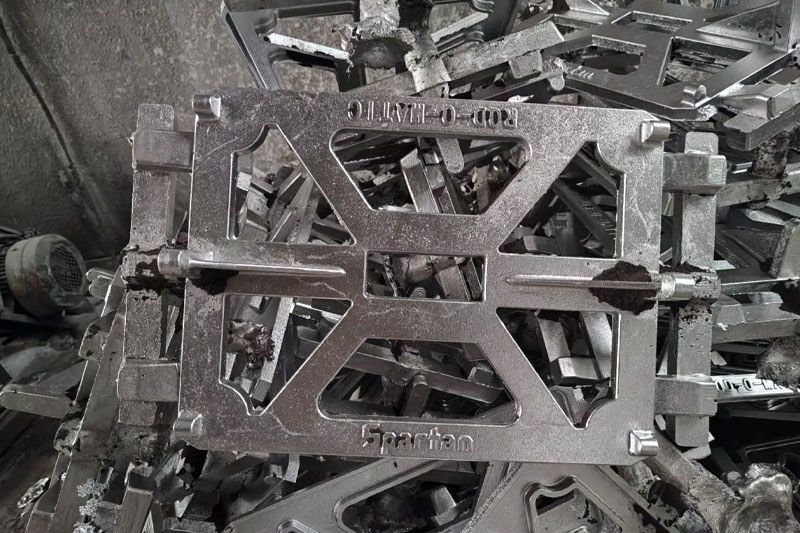
Aluminum Sand Casting Product Cases
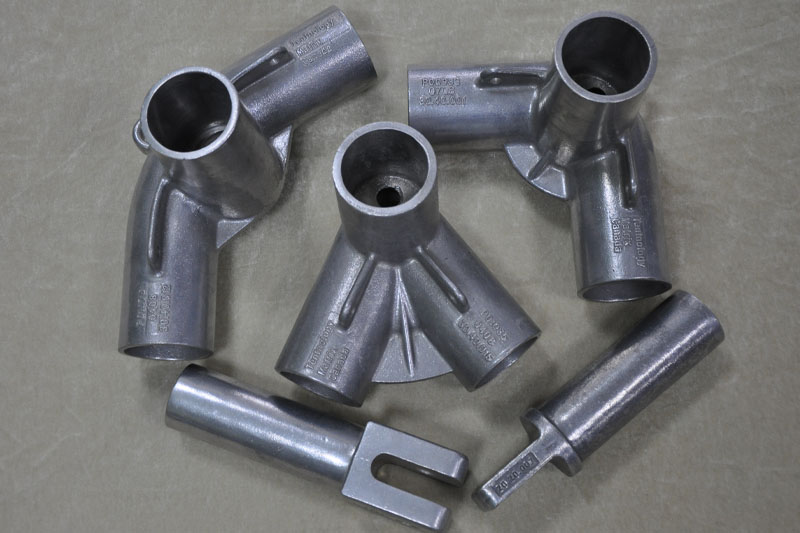
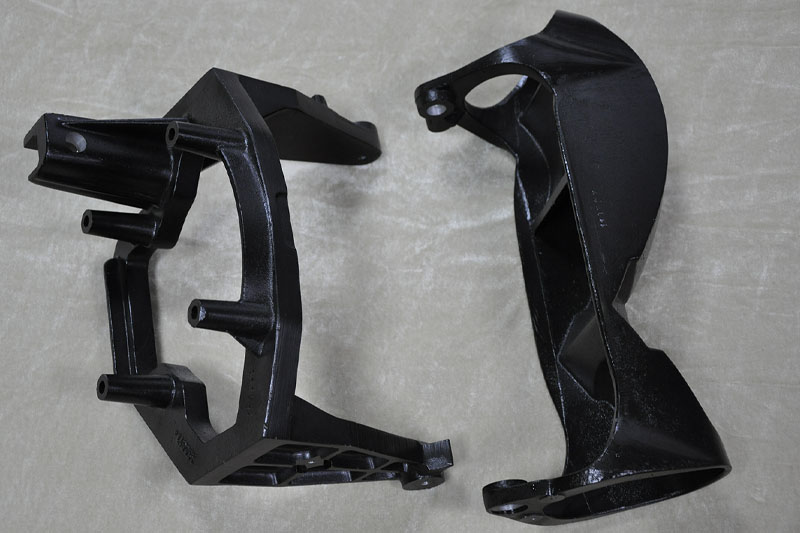
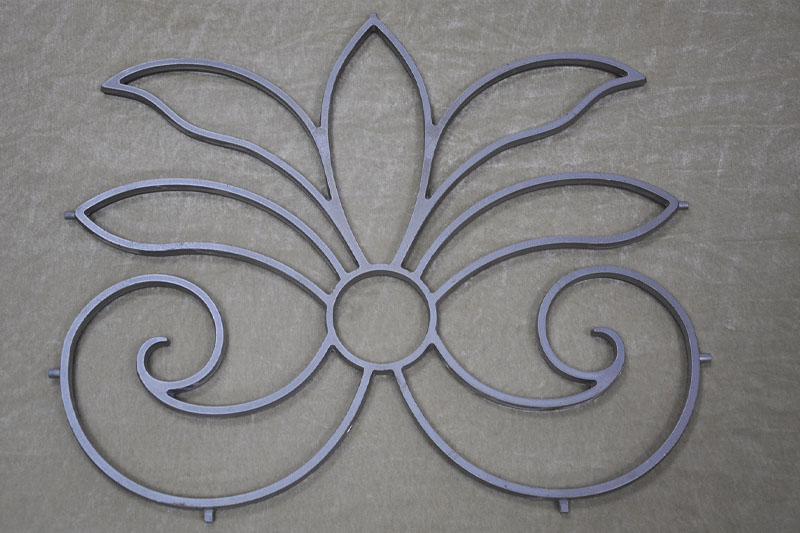
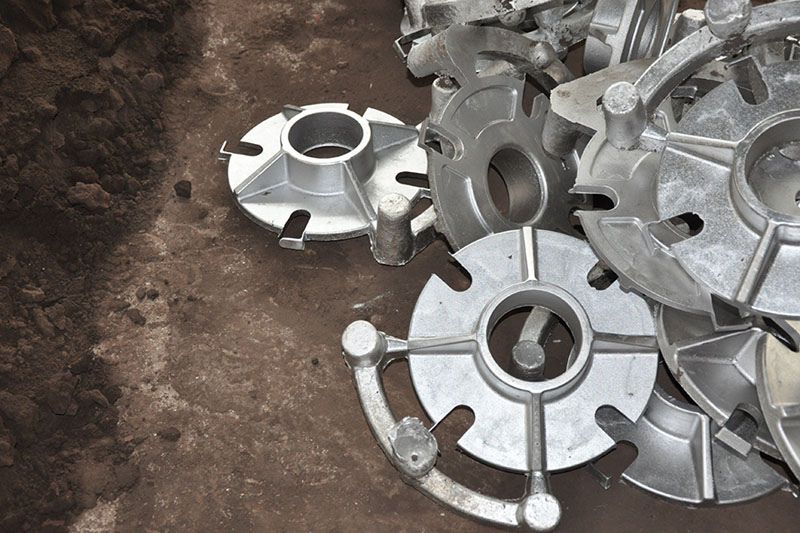
Material Scope
Innovaw's foundry sources and qualifies materials against ASTM, JIS, DIN, ENAC, ISO, and GB specifications. Aluminum alloy grades commonly used in sand casting include:
- Aluminum Alloys
ASTM-A319, A413, A355, A356, A357
JIS-AC2B, AC4D, AC4C, AC3A, AC4A
DIN-AlSi7Cu4, AlSi5Cu1Mg, AlSi7Mg, AlSi12, AlSi9Mg, AlSi12Cu2Mg1, AlSi6Cu4
ENAC-45000, 45300, 42100, 44100, 43300
How Aluminum Sand Casting Works
Aluminum sand casting produces metal components by forming a mold from bonded sand, pouring molten aluminum into the cavity, and breaking the mold away after solidification. It is one of the most adaptable casting processes in metal manufacturing — balancing geometric flexibility, low tooling cost, and broad size capability in a way that makes it particularly valuable for prototyping, design validation, and medium-to-low volume production.
Why Choose Innovaw for Aluminum Sand Casting
Innovaw's primary commitment is to meet — and consistently exceed — customer expectations in quality, delivery, and performance. Our aluminum sand casting capabilities are backed by proven production capacity, deep technical expertise, rigorous quality systems, and responsive customer service.
Production Capability
Innovaw's sand casting facility combines standardized workshops with a full complement of sand processing, molding, and finishing equipment, supporting a daily output of 3–5 metric tons of finished castings.
Our production operations are led by more than 20 production management specialists, supported by hundreds of skilled workers who deliver professional and reliable manufacturing services every day.
We offer a complete one-stop service — from pattern development and PPAP approval through sand casting production, CNC machining, and surface treatment — allowing customers to manage a single supplier throughout the full product lifecycle.
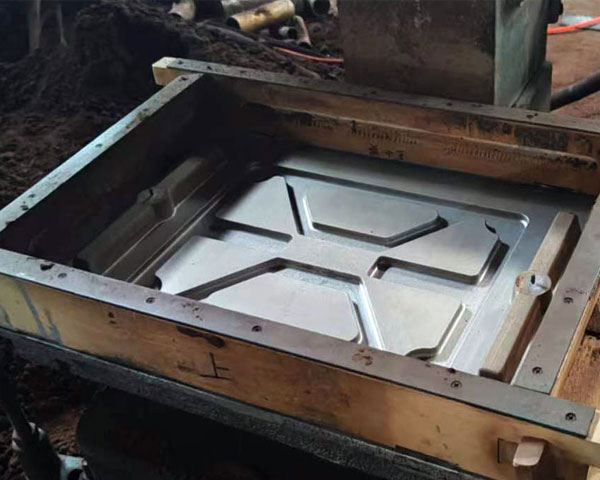
Technical Capability
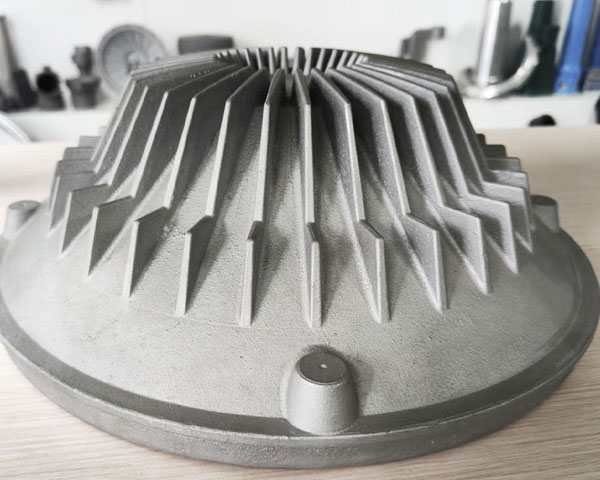
Our engineering team of more than 20 development engineers and casting industry specialists provides comprehensive technical support from initial concept through production ramp.
We offer an end-to-end technical service spanning DFM analysis, 3D mold design, mold flow simulation, and rapid prototyping — helping customers move efficiently from drawing to high-quality finished part.
We specialize in developing practical engineering solutions that reduce manufacturing costs and improve product quality — particularly for large or geometrically complex parts where sand casting's design flexibility is a decisive advantage.
Our team has extensive experience designing and producing components with complex internal geometries, using resin sand cores to achieve cavity structures that are not achievable with permanent tooling alone.
Quality Control
All Innovaw sand casting products are produced and managed under the IATF 16949 quality management system.
We apply the full suite of automotive core quality tools — APQP, FMEA, PPAP, MSA, and SPC — to maintain rigorous in-process control at every production stage.
Regular process audits are conducted in accordance with VDA 6.3, and product audits are performed under VDA 6.5, ensuring consistent process integrity and product conformance.
Customer complaints are addressed systematically through 8D methodology, with root cause analysis and corrective actions documented and tracked to closure.
Every part undergoes full-process inspection — from first article through final inspection — using equipment including spectrometers, 3D scanners, X-ray imaging, and ZEISS CMM coordinate measuring machines.
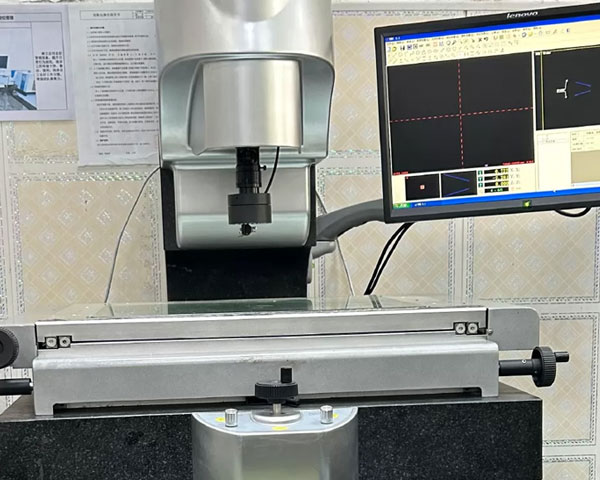
Aluminum Sand Casting FAQs
Q1. What metal materials can sand casting be applied to?
Sand casting is one of the most material-versatile casting processes available, compatible with virtually any metal that can be melted and poured. Commonly processed materials include aluminum alloys, cast iron, ductile iron, carbon steel, stainless steel, copper alloys (brass and bronze), and nickel-based alloys. Because sand molds are inexpensive to produce and tolerate high pouring temperatures, sand casting can accommodate metals that would be impractical or uneconomical to process through permanent-mold or die casting routes. At Innovaw, our primary focus is aluminum alloy sand casting, covering grades from the ASTM, JIS, DIN, ENAC, ISO, and GB standard families.
Q2. How does sand casting compare to other casting processes for lead time?
For prototype and first-article work, sand casting typically offers the shortest path from drawing to part. Because mold tooling consists of a simple pattern rather than a precision steel die, it can be produced quickly and at low cost — sometimes within days for simple geometries. There is no hard tooling qualification process, and design changes can be incorporated by modifying the pattern rather than reworking expensive die steel.
For series production, cycle time per part is longer than die casting or gravity casting, because each sand mold is used only once and must be reformed between pours. Overall program lead time therefore depends on daily mold-making capacity and part complexity. Innovaw's three production lines and experienced molding teams maintain a daily output of 3–5 metric tons, providing reliable throughput for medium-volume programs.
Q3. How do I know if my parts are suited to sand casting?
Sand casting is the most appropriate process when one or more of the following apply to your component: the part is large — exceeding the capacity of gravity casting or die casting equipment in size or weight; the production volume is low to medium and investment in permanent tooling is not yet justified; the design is still evolving and the flexibility to modify the pattern at low cost is important; the part geometry requires large internal cavities or complex passages that are formed with expendable sand cores; or the required alloy or section thickness is not suited to high-pressure die casting. Sand casting is also the standard choice for heavy structural components in marine, power generation, heavy machinery, and oil & gas applications where part size, structural integrity, and customization outweigh the need for tight tolerances or fine surface finish.
Q4. In which industries is sand casting most widely used?
Sand casting serves the broadest industry base of any casting process, precisely because it imposes the fewest constraints on part size, geometry, and material. Key sectors include heavy machinery (gearboxes, pump bodies, compressor housings), marine (propulsion components, hull fittings, stabilizer parts), power generation (turbine housings, generator frames), oil & gas (valve bodies, manifolds, pipeline fittings), automotive (engine blocks, cylinder heads, suspension brackets at development stage), construction and infrastructure (structural brackets, architectural hardware, bridge components), and aerospace (structural frames and non-critical housings at prototype or low-volume stage). Wherever part size, design flexibility, or low tooling cost is the overriding concern, sand casting is typically the first process considered.
Q5. What is the difference between sand casting and high-pressure die casting?
The fundamental distinctions are mold type, metal entry method, part capability, and production economics. Sand casting uses an expendable sand mold formed around a reusable pattern — each mold is used once and then broken away. Metal enters the cavity under gravity. This makes sand casting highly flexible in terms of part size (no practical upper limit), geometry (undercuts and internal passages via sand cores), and tooling cost (patterns are far cheaper than steel dies). The trade-offs are longer per-part cycle times, coarser as-cast surface finish, and wider dimensional tolerances compared to die casting.
High-pressure die casting uses a permanent steel die into which molten metal is injected at pressures up to 200 MPa. This enables very thin walls, complex precision features, fast cycle times, and excellent surface finish — but at much higher tooling cost, with geometric constraints imposed by the two-part die, and with porosity risk in thick cross-sections. HPDC is optimized for high-volume production of smaller, precision parts; sand casting is the better choice for large, structurally complex, or low-to-medium volume components where tooling cost and design flexibility are the deciding factors.
Q6. Why choose aluminum sand casting for your products?
Sand casting's defining advantage is its combination of geometric freedom, size scalability, and low tooling barrier — making it the most accessible and adaptable casting process available. For the right application, it is not a compromise choice; it is simply the most practical and cost-effective route.
1. When to choose sand casting
- Large or heavy components: Parts exceeding 600 mm in any dimension, or weights above 20–30 kg, that are beyond the capacity of gravity casting or die casting equipment.
- Complex internal geometry: Components with internal passages, cavities, or undercuts formed by expendable sand cores — including manifolds, pump bodies, and complex housings.
- Low-to-medium production volumes: Programs where the per-part value or volume does not justify the tooling investment of permanent-mold or die casting processes.
- Prototype and design validation: Pattern tooling can be produced quickly and modified at low cost — making sand casting ideal for first-article work and iterative design development.
2. Key advantages of sand casting
- Lowest tooling cost of any permanent casting process: Pattern tooling is a fraction of the cost of steel dies, making sand casting economical even for single-piece or very small batch orders.
- No practical size limit: Sand casting can produce components of almost any size — from small prototype parts to structural castings weighing hundreds of kilograms.
- Design flexibility and rapid iteration: Pattern changes can be incorporated quickly and at minimal cost, supporting fast design cycles and reducing the risk associated with committing to permanent tooling early.
- Good structural integrity for thick-section parts: The slower cooling inherent to sand casting suits thick-walled components where controlled solidification is needed to avoid thermal stress and cracking.
For product development programs, large structural components, and applications where design flexibility and low tooling cost outweigh the need for tight tolerances or high surface finish, aluminum sand casting is a proven and practical manufacturing solution — offering the breadth of capability and economy of tooling that no other casting process can match at the same scale.
Technical Capabilities
Request a Quote
Name can't be empty
Email error!
Send Your Message
Note: If you are looking for a job, please send an email to it2@innovaw.com