- CAD Design: The part geometry is created in CAD software, defining all dimensions, features, and tolerances.
- Toolpath Generation: CAM software converts the CAD model into a toolpath, determining how the cutting tools will move to produce the part.
- G-Code Programming: The toolpath is translated into G-code — the machine's instruction set — specifying speeds, feeds, and tool movements.
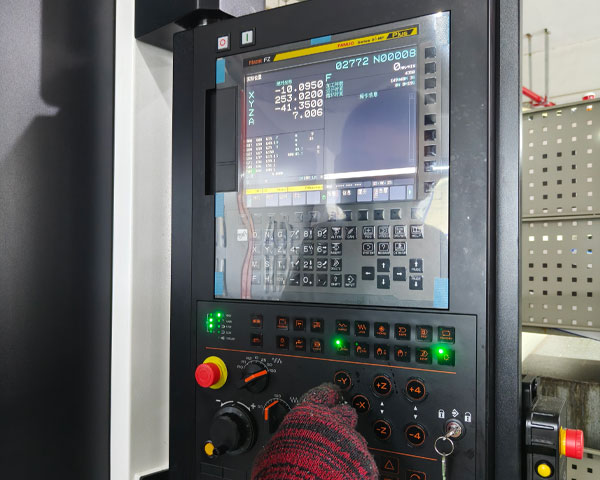
- Machining: The CNC machine executes the program, cutting and shaping the workpiece with high precision across multiple operations as required.
- Post-Processing: Finished parts undergo any required secondary operations — deburring, polishing, surface coating, or assembly — before inspection and delivery.
CNC Machining
CNC Machining (Computer Numerical Control machining) is a manufacturing process in which pre-programmed software controls the movement of machine tools — including mills, lathes, drills, and grinders — with high precision and repeatability. The defining capability of CNC machining is its ability to produce complex, tight-tolerance parts that would be impractical or impossible to achieve through manual methods.
Advantages of CNC Machining:
- High Precision: CNC machines consistently achieve extremely tight tolerances, down to a few microns, across both simple and complex geometries.
- Repeatability: Once programmed, a CNC machine reproduces identical parts with exceptional consistency — cycle after cycle, shift after shift.
- Geometric Complexity: CNC handles intricate designs including curved surfaces, undercuts, and true 3D profiles that are beyond the reach of manual machining.
- Efficiency: Automated operation reduces cycle time per part and eliminates the variability introduced by manual handling.
- Flexibility: CNC programs can be quickly modified or switched between jobs, making the process equally suited to prototype runs and high-volume production.
_1750750871_WNo_1000d800.jpg)
CNC Machining at Innovaw
Innovaw established its dedicated CNC machining operation over 15 years ago in response to growing customer demand for post-casting precision work. Today, the facility operates more than 30 CNC machining centers from world-class manufacturers including DMG Mori and Yamazaki Mazak, covering the full range of operations: milling, turning, grinding, boring, drilling, tapping, and reaming. Beyond post-casting and post-forging machining, we also machine directly from extruded raw material stock to deliver complete, finished parts from a single source.
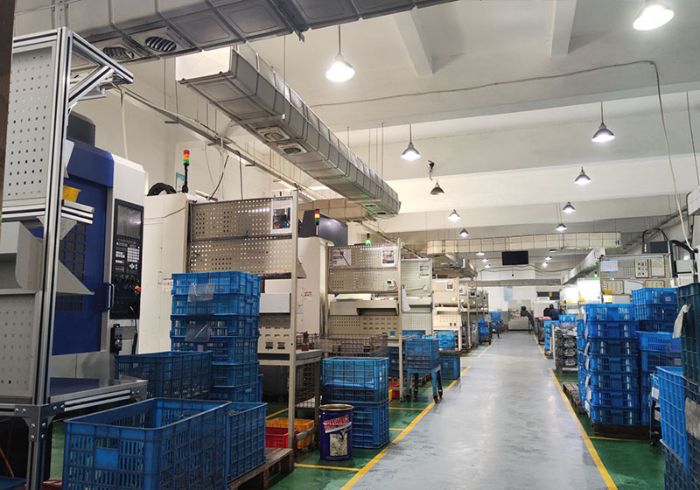
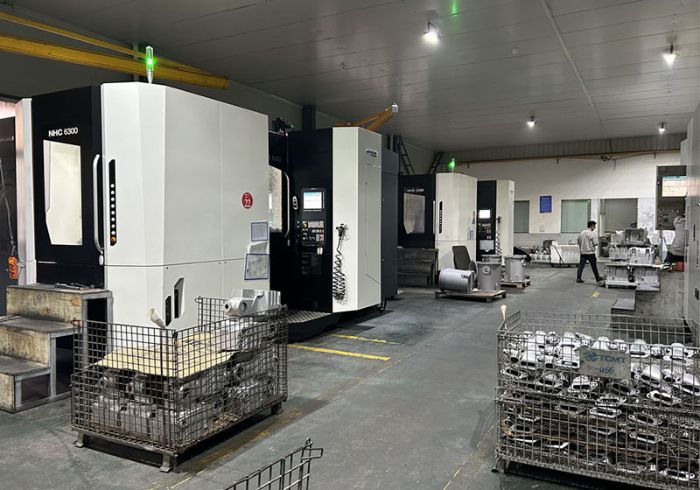
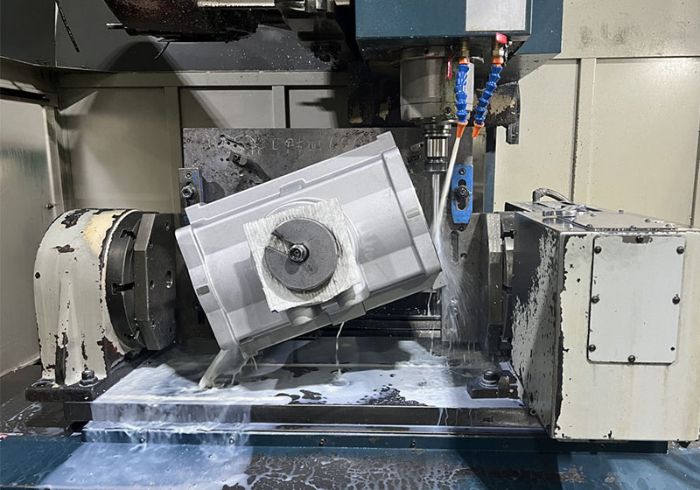
Our CNC machining products serve the automotive, transmission, medical equipment, aerospace, lighting, and engineering machinery industries. Part sizes range from 10×20 mm up to 1,500×1,000 mm. Achievable machining tolerances reach ±0.008 mm, with surface roughness ranging from Ra 3.2 μm down to Ra 0.4 μm. Daily production capacity is approximately 1,500 to 15,000 parts, depending on part complexity.
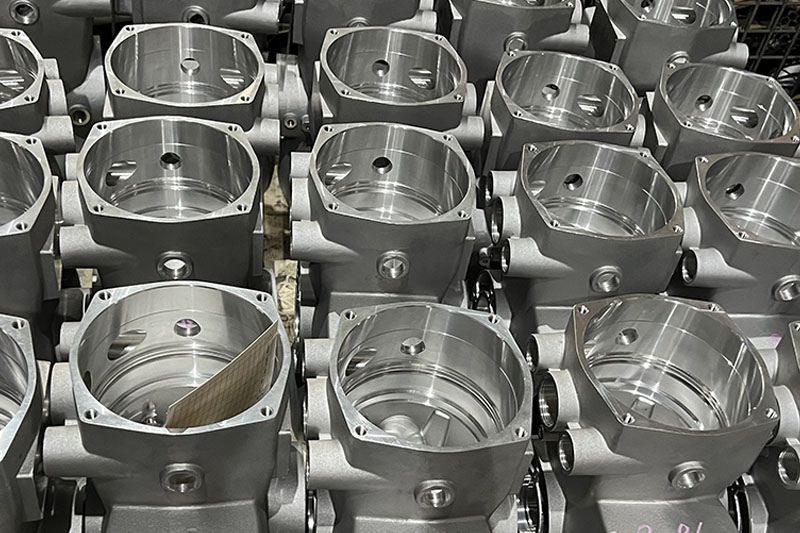
CNC Machining Product Cases
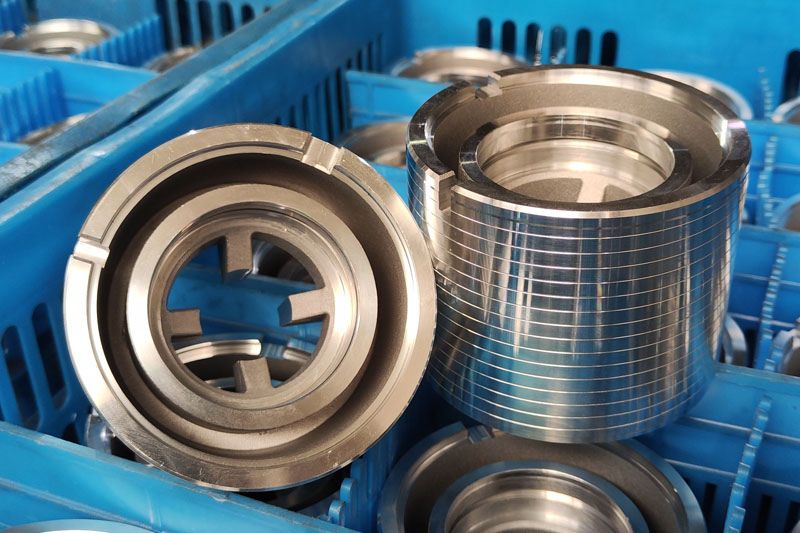
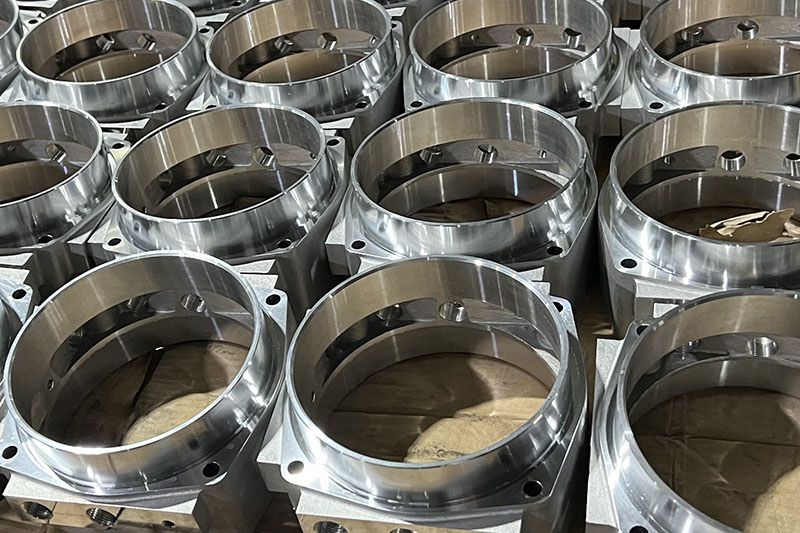
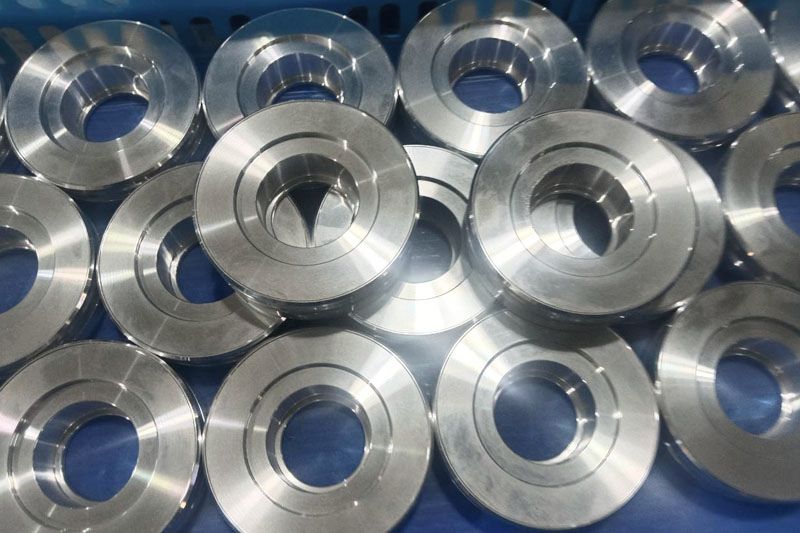
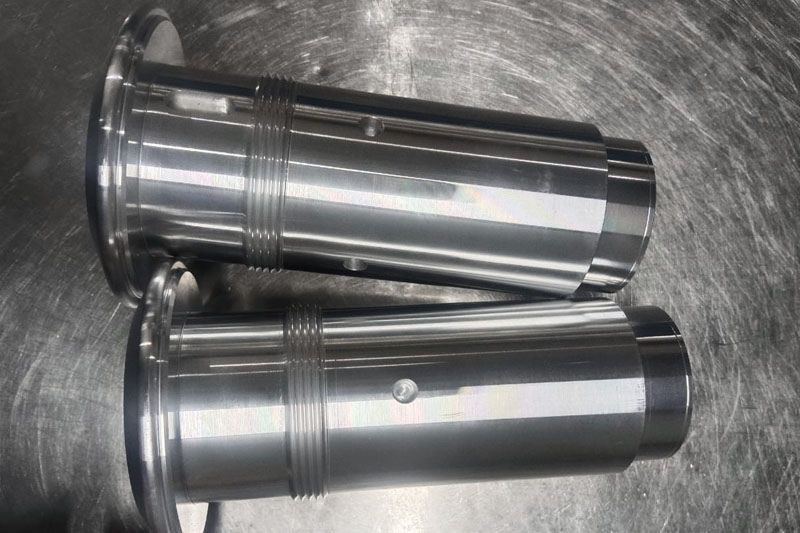
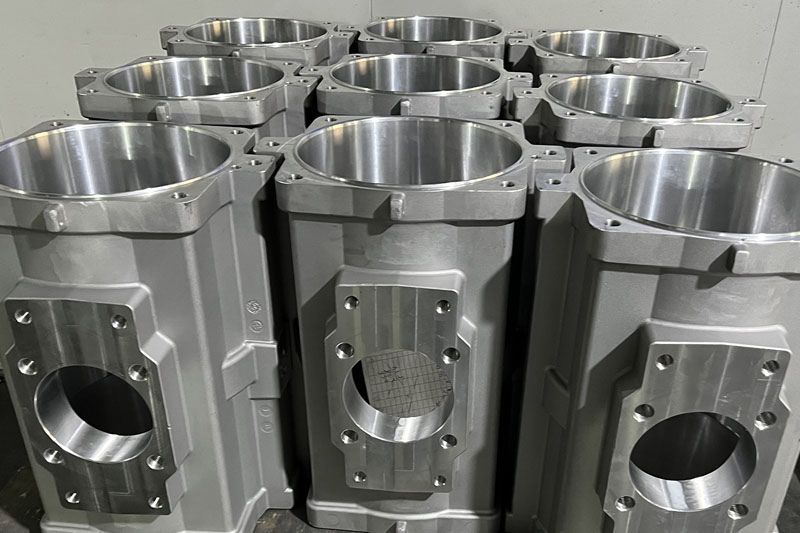
Material Scope
- Materials
Metals: Aluminum, steel, titanium, brass, and copper
Plastics: ABS, Nylon, PTFE (Teflon), and others
Composites: Carbon fiber, fiberglass, and similar engineered materials
Wood: For furniture, models, and functional prototypes
How CNC Machining Works
CNC machining uses computer-controlled motion to direct cutting tools across one or more axes, executing operations such as milling, turning, drilling, and grinding with a level of precision and consistency that manual methods cannot match. The result is high-accuracy parts with complex geometries, excellent surface finish, and repeatable dimensional characteristics — produced efficiently and with minimal operator intervention.
Why Choose Innovaw for CNC Machining
Innovaw's primary commitment is to meet — and consistently exceed — customer expectations in quality, delivery, and performance. Our CNC machining capability extends well beyond post-casting work; it is a standalone precision manufacturing service that we have continued to invest in and develop over many years.
Production Capability
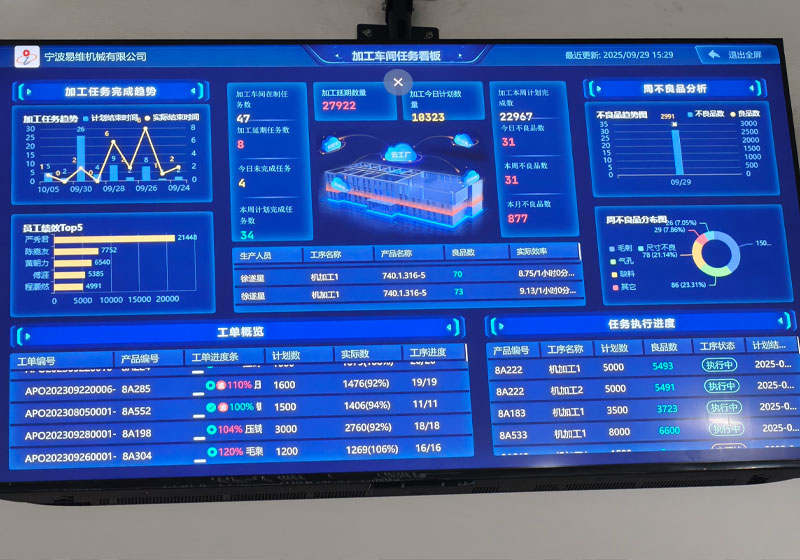
Innovaw's machining facility combines standardized workshops with a full suite of production hardware and software systems, delivering a daily output of 1,500 to 15,000 parts depending on complexity.
Our operations are supported by more than 20 production management specialists and hundreds of skilled workers, providing professional and reliable service to customers every day.
We offer a complete one-stop service — from mold development and PPAP approval through casting, CNC machining, and surface treatment — so customers deal with a single supplier from start to finish.
Technical Capability
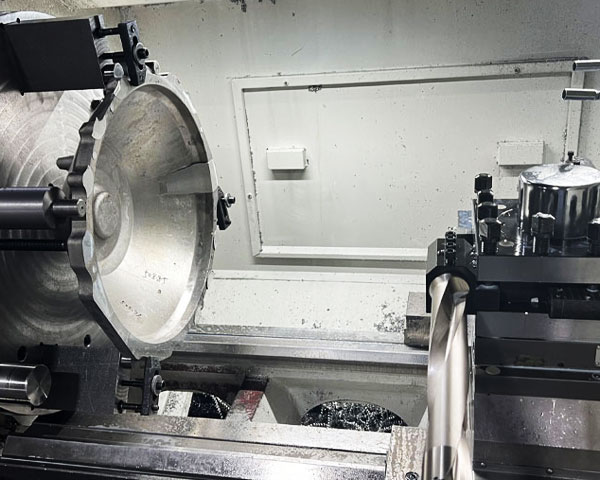
We provide a comprehensive range of CNC machining services, including CNC milling, turning, grinding, boring, drilling, tapping, reaming, and dimensional inspection — all performed in-house.
Multi-axis CNC machining enables complex geometries to be completed in a single clamping setup, reducing repositioning errors and shortening cycle times.
CAM-driven toolpath optimization ensures efficient cutting strategies, reduced cycle times, and consistent surface quality across every production run.
Advanced in-process sensing and feedback systems provide real-time monitoring of key machining parameters, enabling immediate correction and maintaining dimensional stability throughout production.
Quality Control
All Innovaw CNC machining products are produced and managed under the IATF 16949 quality management system.
We apply the full suite of automotive core quality tools — APQP, FMEA, PPAP, MSA, and SPC — to maintain rigorous in-process control at every production stage.
Regular process audits are conducted in accordance with VDA 6.3, and product audits are performed under VDA 6.5, ensuring consistent process integrity and product conformance.
Customer complaints are addressed systematically through 8D methodology, with root cause analysis and corrective actions documented and tracked to closure.
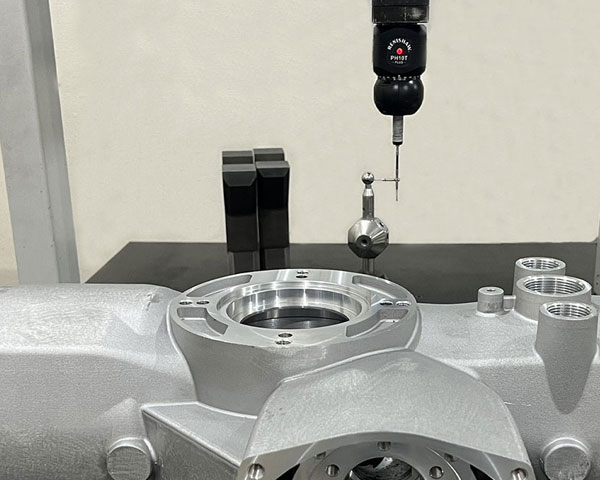
Every part undergoes full-process inspection — from first article through final inspection — using equipment including spectrometers, 3D scanners, X-ray imaging, and ZEISS CMM coordinate measuring machines.
CNC Machining FAQs
Q1. What are the main types of CNC machining?
The core CNC machining operations are milling, turning, drilling, grinding, and electrical discharge machining (EDM). Milling uses rotating cutters to remove material from a stationary workpiece; turning rotates the workpiece against a stationary cutting tool; drilling creates holes; grinding produces fine surface finishes and tight tolerances; and EDM uses electrical discharges to erode conductive material — ideal for hardened steels and complex cavity forms that cutting tools cannot reach.
Q2. Can CNC machining only be used for aluminum castings?
No. CNC machining is a highly versatile process that operates on a wide range of materials beyond aluminum castings. Metals — including steel, stainless steel, titanium, brass, and copper — are all routinely machined to tight tolerances. Engineering plastics such as ABS, nylon, and PTFE are also compatible, as are composite materials like carbon fiber. At Innovaw, we machine parts from cast blanks, forged blanks, and extruded raw material stock, depending on the application and customer requirements.
Q3. What metal materials can CNC machining be applied to?
CNC machining is compatible with virtually all machinable metals. Commonly processed materials include aluminum alloys (ADC12, A380, 6061, 7075), carbon and alloy steels, stainless steels, brass and bronze, copper, titanium, and high-performance nickel-based superalloys such as Inconel — used in aerospace and high-temperature industrial applications. Material selection is driven by the part's mechanical requirements, weight targets, corrosion environment, and surface finish specification.
Q4. Is CNC machining faster to deliver than casting?
For prototypes and low-volume orders, yes — CNC machining typically offers faster delivery than casting because no tooling needs to be designed or built before production can begin. A part can go from CAD drawing to finished component in days. For high-volume production, however, the economics shift: casting produces parts at a far lower per-unit cost at scale, and the upfront tooling investment is recovered quickly. The right choice depends on volume, complexity, and timeline — Innovaw can advise on the most appropriate process for your specific program.
Q5. How do I know if my parts require CNC machining?
CNC machining is the right choice when your parts have one or more of the following characteristics: tolerances tighter than the as-cast or as-forged process can achieve; functional surfaces such as bores, threads, or sealing faces that require precision finishing; complex geometries — internal cavities, angled holes, non-standard profiles — that casting alone cannot produce; or low-to-medium volumes where tooling investment is not justified. Many of Innovaw's customers use casting to produce the near-net-shape blank and CNC machining to bring critical features to final specification — getting the best of both processes.
Q6. In which industries is CNC machining most widely used?
CNC machining is applied across virtually every precision manufacturing sector. The most significant industries include automotive (engine components, transmission housings, structural brackets), aerospace (structural frames, turbine components, actuation parts), medical devices (surgical instruments, implant components, diagnostic equipment housings), electronics (heat sinks, enclosures, connectors), and defense (optical mounts, guidance system housings, ordnance components). The common thread is a requirement for tight tolerances, reliable repeatability, and high material integrity.
Q7. CNC machining vs. traditional machining
Automation and speed: CNC machining executes programmed operations autonomously, dramatically reducing cycle time and operator involvement. Traditional machining relies on continuous skilled operator input for setup, adjustment, and monitoring.
Precision and complexity: CNC consistently achieves tolerances down to a few microns and handles multi-axis, multi-feature parts in a single setup. Traditional methods struggle with intricate geometries and are more susceptible to operator-induced variation.
Labor cost: While CNC requires skilled programmers and setup technicians, its high degree of automation significantly reduces the per-part labor content — particularly for medium and high volumes.
CNC machining has become the standard for precision manufacturing, enabling the consistent production of everything from miniature medical components to large structural aerospace parts. It represents one of the most impactful shifts in modern industrial production.
Q8. Why use CNC machining to manufacture your product?
CNC machining is the appropriate manufacturing route when your product shares one or more of the following characteristics:
1. When to choose CNC machining
- High precision requirements: When part tolerances are within ±0.01 mm or tighter, CNC machining's programmatic control and excellent repeatability make it the reliable choice — delivering dimensional consistency that manual methods and most casting processes cannot guarantee.
- Complex or non-standard geometry: For parts with compound curved surfaces, irregular profiles, or undercut features, multi-axis CNC (3-, 4-, or 5-axis) removes the structural constraints of conventional processes and machines the feature in a single setup.
- Low-volume or customized production: CNC requires no hard tooling, making it ideal for prototype builds, custom orders, and short production runs where design changes may still be needed and mold investment is not justified.
- Material diversity: CNC processes metals, plastics, and composites with equal capability, making it the go-to solution when material requirements vary across a product family.
2. Key advantages of CNC machining
- High repeatability: Program-driven operation eliminates operator-to-operator variation, ensuring that every part produced matches the drawing — from the first piece to the ten-thousandth.
- Fast turnaround: Once a design is finalized, programming and production can begin within hours — making CNC the preferred route for urgent samples, pre-production trials, and expedited deliveries.
- No tooling investment: Unlike die casting or injection molding, CNC requires no hard tooling upfront — significantly lowering the barrier to entry for new programs, start-up projects, and trial production stages.
- Complex feature capability: Internal cavities, angled bores, irregular cut profiles, and fine threaded features that exceed the capability of conventional equipment are readily achievable with modern multi-axis CNC — with a greater degree of geometric freedom than almost any alternative process.
- Easy design iteration: Design revisions are implemented through software updates alone — no retooling required — allowing engineering teams to iterate quickly and cost-effectively.
CNC machining is a flexible, efficient, and highly precise manufacturing method — particularly well suited to parts with demanding quality requirements, complex geometry, or compressed development timelines.
Technical Capabilities
Request a Quote
Name can't be empty
Email error!
Send Your Message
Note: If you are looking for a job, please send an email to it2@innovaw.com